Let’s talk about sleeping outside!

I am, once again, writing a free post this week for people who can’t afford to access the paywalled posts. I try to keep these posts positive, because I think we all need a little release from the horrors of the world right now. Next week, I want to write about yet another deportation flight to Myanmar or Marco Rubio’s interesting Spanish language speech which overlooked the Platt Amendment. But this week, I want to write about the basics of sleeping outside in the hope that I can welcome some people into the outdoors who might feel unwelcome or overwhelmed otherwise.
So, what do you need to sleep outside? Well first you need a place, and I covered how to find one last month. But you also need some very basic equipment, which is what I want to go through today. It can be really easy to be really overwhelmed by all the marketing and options, so I want to offer perhaps some basic guidance that will help people get out there without feeling like they need to drop hundreds of dollars to try out something they don’t know if they will like.
All you really need to sleep outside is something to sleep on, and something to sleep in. If it’s raining, or there are a lot of bugs, you might also need something to sleep under but most people prefer to camp in the summer so you might not need much in the way of shelter. I think most people associate camping with tents, but the vast majority of my night outdoors are not in tents. I personally try to cultivate minimalism in my approach to the outdoors because I like to minimize the thing that are between me and nature. A tent feels like an “inside” space, and that might be very comforting to a lot of people, but personally I prefer to feel like I am outside when I am camping, so I much prefer a very minimal shelter or none at all. This does also happen to allow me to pack lighter and smaller, but that’s not necessarily why I do it.
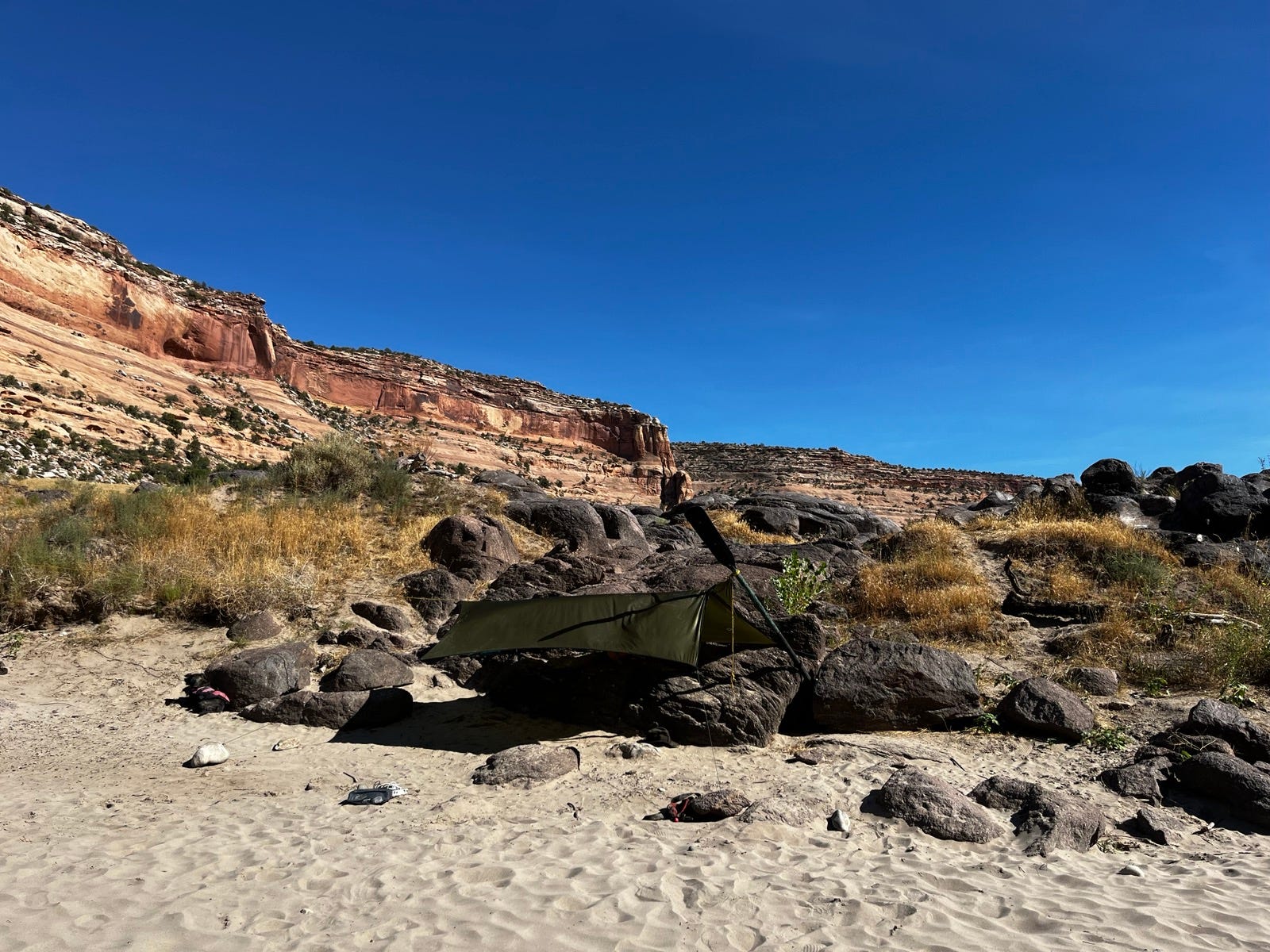
A tarp camp along the Green River
All your choices in terms of sleeping outside will have to balance weight, volume, comfort, durability, and cost concerns. It is very hard to find things that are light, small, comfy, durable, and cheap. So in most cases you’ll have to accept compromises. If you’ve ever built a D&D character, you will understand what I am talking about here.
Assuming we want to keep our budget limited, and that we are camping in the summer, we can save a great deal of money, weight, and space by simply not taking a tent. For most of my camping trips, I roll out my sleeping pad on either a piece of Tvyek Housewrap - which you can get for free at a lot of construction sites or for about 35 bucks from an outdoor brand, or a bivvy sack. Depending on the brand of bivvy or groundsheet you buy, your cost could be zero, to 10-40 percent of the cost of a pretty economical tent. But sleeping like this comes with the feeling of exposure that some folks might not prefer. It can also be hard for people who find getting down on the ground and getting back up to be a challenge for them.
So let’s look at some options which balance those weight, volume, comfort, durability, and cost concerns a little differently. If we are not camping far from a vehicle, we don’t need to worry too much about weight, and we might feel more comfortable sleeping in an enclosed structure, so we might opt for a car camping tent. Generally, when I am looking for tents for car camping I add the brand’s warranty policy to my list of concerns, and pretty much remove weight and size. Core North American outdoor brands like MSR, Nemo, and Big Agnes have great reputations for warranty, I recently had some issues with an MSR stove I have used probably once a month for a decade, they offered me the change to buy the replacement parts, or send it in for a complete overhaul for $30. I once saw them warranty a tent that got struck by lightning. I will pay a little more for that kind of security, because I use my stuff a lot, others might not think it is worth it. Otherwise, for car camping tents, I really think mostly about cost and size. I think if you’re camping for the first time it can be tempting to buy a very cheap tent, and that’s fine, but I would hate to see that much plastic go into the trash if it broke quickly. If you get something a little more durable and later decide to upgrade, you can always sell it or pass it along to an unhoused neighbor.
I tend to prefer freestanding tents in this application, this means the tent will retain its structure without guylines so you could set it up and then move it around. This just makes for an easier pitch. If I had to buy one right now, I would probably go on Sierra Trading Post’s website, or a similar discounter, and look for a freestanding tent that uses a dome structure and Aluminium interconnecting bendy poles, has plenty of space, and isn’t one of the gimmicky “pop up” models. This Kelty, for example, is 75 bucks and you could use it for years with some care. Avoid straight sided tents like this one, that thing is wind sock. Generally allot more space than you think you need and take the number of “people” listed with a huge grain of salt. You can sleep 6 people in a 6 person tent, but they might have to crawl over each other to get out of bed in the morning. I have also spent hundreds of nights in the bed of my truck, with a mattress topper that my friend purchased and couldn’t return. Lots of people fold down their car seats and sleep in there. If it feels comfy, I say go right ahead, just make sure to crack a window.
If you’re more interested in backpacking, weight and size are going to be a consideration. I want to cover this in more detail separately, but briefly I will say that my preference is a tarp and bivvy combo. I only really get the tarp out if I need shade, or if I need wind or rain protection.I love th bivvy because I can see the stars at night, and sleep in a tiny space, which is useful in the mountains where there are not may flat spots. I don’t think anyone needs to be starting out with Dyneema, so I would suggest looking for a Silpoly or Silnylon shaped tarp, and either picking one with sealed seams or allotting some budget and time to sealing the shelter. Options abound here, and most will rely on you using your hiking poles at structure for the shelter. The Lanshan 1 used to be a great value option, I think I paid 40 -50 bucks for the Fly sheet, which is the waterproof outer layer, and I use that with my Katabatic bivvy. Sadly the Trump admin has made this tent much less affordable, so you might want to look at Six Moon Designs, Durston, or Tarptent if you have the budget. For affordable, lightweight bug Bivvys Borah Gear and Katabatic make great options, and if you’re smaller the generic Ali Express bug bivvy is fantastic value. I would avoid fully waterproof mountaineering and military style bivvy bags, they get heavy and stuffy and have their place, but camping for fun isn’t it. I’ll cover backpacking options, why I like small space solutions, and shared tents in more detail later, but that should get you started.
Now let’s look at something to sleep on, this generally can be broken down into a sleeping pad or a hammock. Sleeping pads are either foam or inflatable. If you want the cheapest, lightest, and most durable option, a Thermarest Z lite is hard to beat. But if you sleep on your side they are really not very comfy. A sleeping pad is going to give you a lot more cushion, but cost a bit more and be vulnerable to punctures. Luckily most pads come with a repair kit. Again I would look for good brands here, like Thermarest, Nemo, Big Agnes, and Sea to Summit. The Thermarest Neoair NXT is the gold standard for backpacking but it is not cheap and not super comfy. For car camping, something thicker and heavier is fine. Exped even makes some mats that will fit inside your car if you fold the seats down. When looking at a pad consider length and width, I think a standard length is fine for most people unless they sleep on their backs like a corpse. I am 6’3” and side sleep on a standard pad. Sometimes a wide pad is nice if you sleep in a fetal position. Consider the R value on your pad as well, in recent years this has become an actually reliable standardized measure of insulation, 2 is the minimum I would go for, and above 4.5 is ideal for cold weather. I might treat some of the R value claims of Amazon brands with skepticism, but core industry brands now actually have some standardization around pad R value, even if they lack it around sleeping bag ratings. You can’t really have too much R value, your mattress at home has an R value far higher than any sleeping pad and you don’t overheat in your bed at night. I found this Sea to Summit insulated pad that would work for most weather people who want to sleep in outside on sierra for $99.99. You could go much cheaper and probably be fine as well, with brands like Klymit but you’re giving up some warmth and some weight. I would avoid the Klymit pads with big holes in them. Sure they are light, but they are not insulating you from the ground and they are easy to get tangled in.
You could also sleep in a hammock, which is really a whole topic in itself. For that you’ll need a hammock, some straps, possibly an overquilt and an underquilt, and a tree or something to hang on. With hammocks, you will want to size up if you’re taller. I use a larger hammock from Dutchware that’s been through the Darien gap and all over the world, I love it. They have some great beginners resources for hammock camping and sell components for making your own, which is cool. If hammock camping is appealing to you, or if it might be easier for you and your body, and you’re confused by wanting to buy one, just message me and I’ll help you out. Otherwise I’ll cover this in detail later.
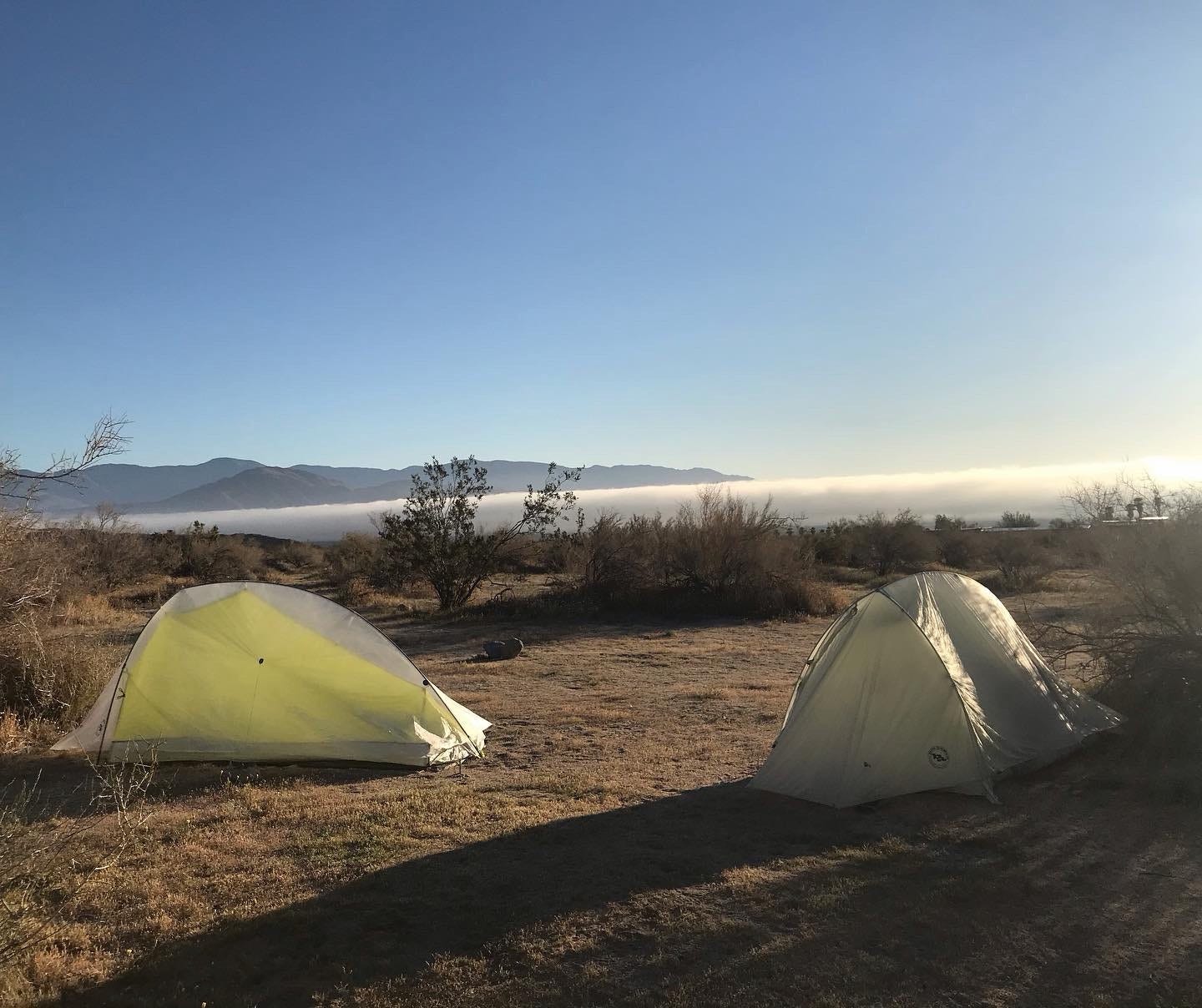
Two Big Agnes tents in the desert
If sleeping on a pad or in the air doesn’t seem fun or possible for you, that’s fine. Getting up or down can be hard for some folks, but that shouldn’t stop you sleeping outside. A cot is a great way to go for a lot of people. I have less experience here, I have slept on plywood bunks in cabins a good bit nut not on cots in tents. Helinox is a brand owned by DAC, the company which makes basically every tent pole and folding chair / cot pole structure, so they may be a good place to start. I think if I was looking for one of these, I’d heavily lean towards something with a good return policy. It’s easy to test a cot in your living room, so start cheap and lie down on the cot for a good amount of time so see if you feel hot spots or sagging that causes pain, see if it is high enough for you to easily get up and lay down if that is a concern. Lastly, consider that some of these things are tanks, and they kind of suck to store for the time you’re not using them. This REI option gets recommended a lot, and looks comfy enough that you could get away without a sleeping pad or foam topper, but its folded dimensions are pretty large and it weighs 20lb. That might be fine for some people, but make sure you know what you’re getting into by checking out the folded dimensions that most retailers will list.
Your final item is going to be something to keep you warm, and possibly a pillow. If you are car camping, just take your pillow that you use at home, it’s fine I do it all the time.
In terms of sleeping bags/ quilts, the choices are endless. Essentially all of these items do the same thing, which is trap pockets of air near your body that your body then heats up, these warm pockets of air then stay warm and so do you. It is important to grasp that the heat comes from you, not the actual blanket/quilt/bag. I have spent hundreds of nights in the back of a pickup truck in a Pendleton wool blanket, it’s not a real one because I am not that rich, but it’s very warm, has a nice comforting weight to it, and it’s much easier to clean than a down bag. It also won’t catch fire or develop hotels which render it useless if I wrap myself in it by the fire. It is not light, or easy to pack, so I don’t take it backpacking. If you want an option that you can grow with, and eventually take into the backcountry, I highly recommend a quilt over a sleeping bag. Quilts let you roll around more, and the insulation on the bottom of the bag is compressed anyway, meaning it doesn’t give you much warmth. The only downside of a quilt is that you’re touching the plastic of your sleeping pad which can get sticky or sweaty. I normally sleep in my clothes anyway, so I can take a lighter quilt with a higher temperature rating.
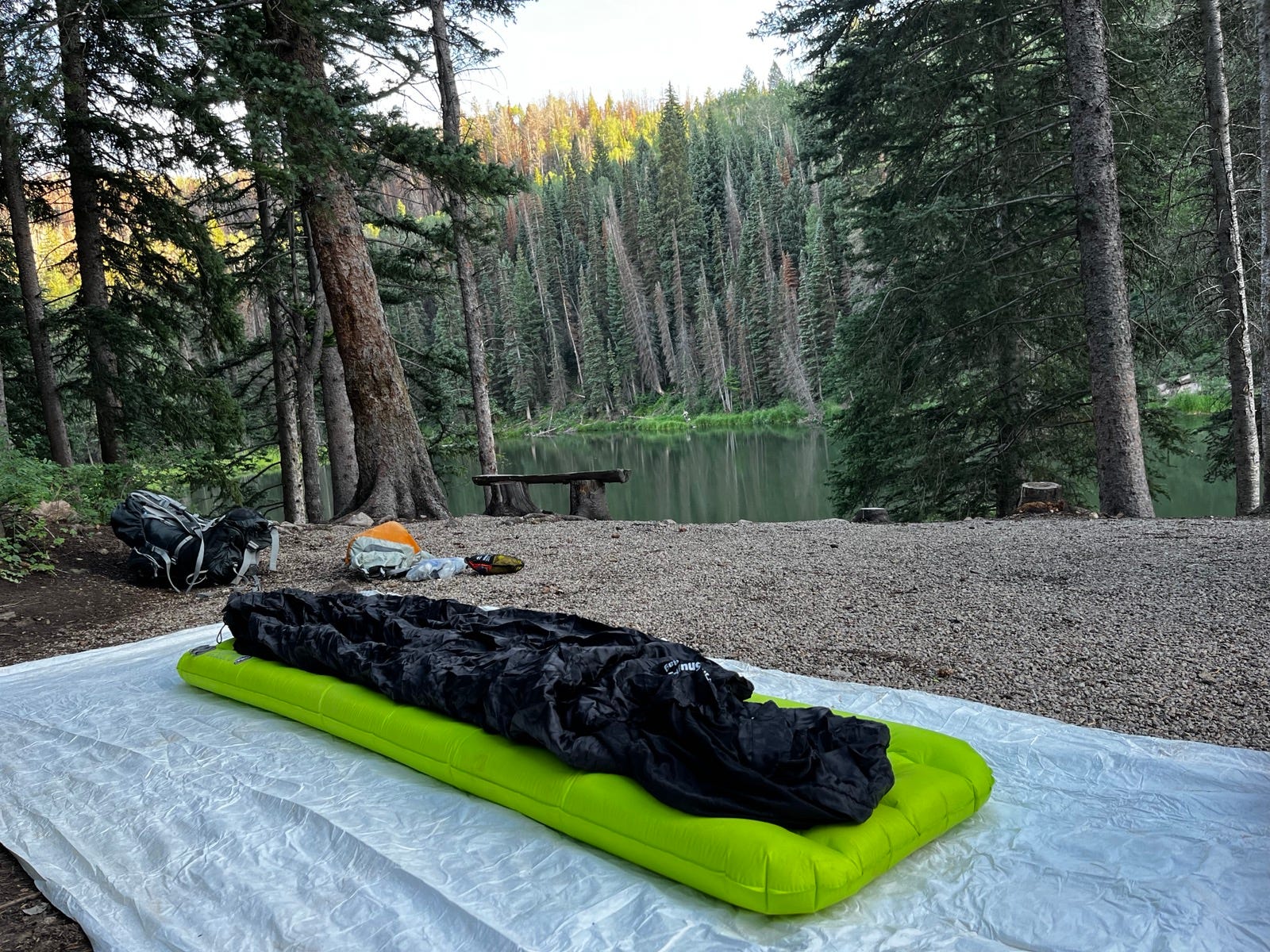
No shelter or bugnet needed! The Snugpak Jungle Bag is not that warm but it is a great synthetic summer bag.
You’re going to have a choice between down and synthetic quilts. Part of this choice is ethical, down comes from dead waterfowl, synthetic fibers come from dead dinosaurs, but nobody killed the dinosaurs in order to make the insulation. Generally down is lighter and warmer per weight, and easier to compress. Generally synthetic fabrics deal better with being compressed for a long time, and getting wet. Modern hydrophobic downs deal better with moisture, modern synthetics are lighter, but in broad strokes the above remains true. I have a few sleeping bags/ quilts. I mostly use a Thermarest Vesper for backpacking, because it is very light and packs down to the size of a grapefruit. I use a synthetic bag for car camping and work trips where I know I will crawl into that bag dirty, sweaty, and gross. Synthetic bags are less likely to lose the loft that keeps you warm if they get wet or dirty, whereas over time my Vesper has lost loft -Thermarest actually replaced it for the cost of shipping when I sent it back to them to see if they could clean it in a way that would restore loft . Temp rating wise, there is still not a great degree of standardization, but in general what you are seeing is the temp at which you could survive in the bag, in your base layer clothing. I often sleep at or below the survival temperature of my bags, but I do so wearing a puffy jacket and thick fleece pants. If I was buying a quilt today, I would look for a brand like Katabatic, Thermarest, Feathered Friends, or Nunatak. I would try and find the quilt with the biggest price reduction in the range that I can afford, and look at places like Ebay, ULGearTrade on reddit, and Facebook Marketplace. Hundreds of quilts likely get purchased and never used. Before buying I would make sure the quilt, especially if it was down, had not been stored in a compressed state for long periods as this tends to compress the lofted fabric and after a while you lose warmth as a result.
If I was car camping, I would buy a nice wool blanket or a Rumpl puffy blanket, and if the wool blanket was itchy I might wash it with conditioner or sleep in a long sleeve base layer and thin pants.
Given that we are already over 2,500 words, I don’t want to write much more. Very briefly if you need a medical device that requires power, I have had good luck with various AC Jackery battery packs which are much quieter, cleaner, and less smelly than a generator and can run off solar panels. If there are other accommodations that you think I might be able to offer insight into please don’t hesitate to reach out and I’ll do my best to help. I hope this takes some of the anxiety away from getting outside, and helps people enjoy the beauty and majesty of nature and see the stars at night in a way that helps them comprehend their place in this huge universe.